
What Are Bunions? More Than Just a Bump
Updated: May 2026
In this article:
Whether walking, running, standing, or jumping, your feet are taking a beating. The inflammation and stiffness caused by bunions can add insult to injury to your already stressed feet. Not to mention the visible deformity caused by bunions that can make you self-conscious about wearing your favorite sandals.
Dr. David Beck at CMC Orthopaedics is sharing some insight on bunions, why they hurt, and how they can be corrected.
What are bunions?
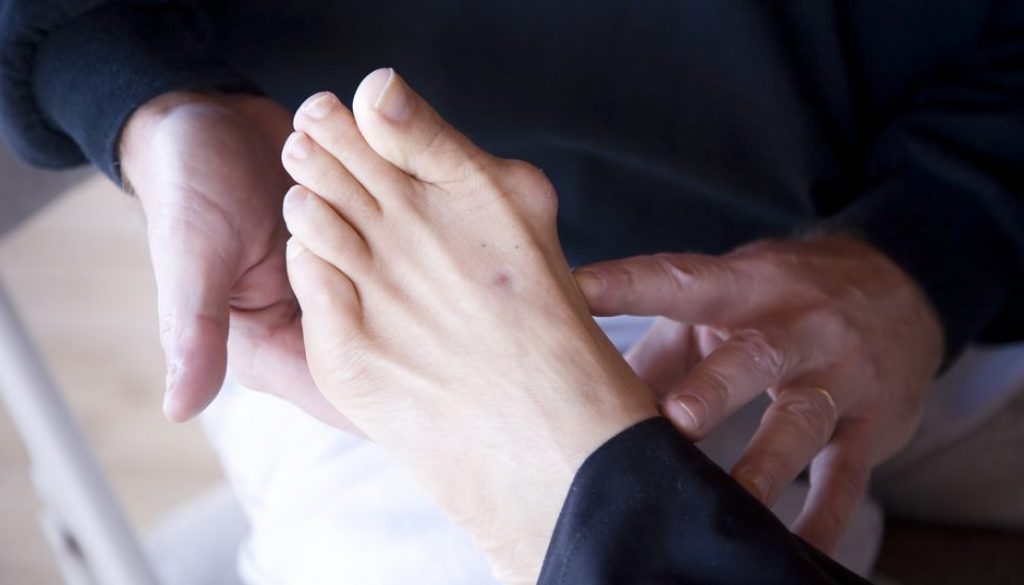
Bunions are formed when the big toe is forced to bend toward the other toes.
“It’s an angular deformity of the first ray of the foot,” explained Dr. David Beck, fellowship-trained foot and ankle surgeon. “A lot of people think it’s a growth, but it’s not. When the ray of the big toe swings over, the bone and tissues at the joint move out of place, making it more prominent.”
Over time, the abnormal alignment of the bone can cause pressure on the joint and a lump called a bunion forms.
“It can become very painful, especially in shoewear. Without correction, the bunion can cause red skin irritations, calluses, burning sensations, become swollen and sore, and can even cause the skin to break down. It can lead to arthritis. In some extreme cases, the first few toes of the foot will be forced to overlap,” says Dr. Beck
When bunions hurt, they can make walking painful. Not only that, but bunions can cause stiffness and difficulty bending the big toe. The hindrances these create may affect how you walk as you attempt to accommodate the pain and stiffness. This compensation for the bunion can cause knee pain because of the altered movements you are making.
What causes bunions?
If you have one, you’ve probably wondered how a bunion happens. Dr. Beck cites a few common causes for this condition:
- Heredity: Bunions can often run in families. “With conditions like bunions, claw toes, and hammertoes, a lot of it is genetic,” says Dr. Beck. “If you see one of your grandmothers with bunions, there’s a good chance you could develop them too.”
- Flat feet: Bunions can develop as a result of the shape of your foot. People who have low arches and flat feet are more susceptible.
- Shoewear: Wearing shoes that are too small, narrow, or have a high heel can cause bunions.

- Other conditions: “You’ll sometimes find bunions in people with other foot deformities and bone conditions,” explained Dr. Beck. These conditions can include:
- Rheumatoid arthritis
- Gout
- Genetic disorders
- Neuromuscular conditions
- Injuries
Can bunions be corrected?
“Bunions are progressive, meaning they do tend to get worse over time,” says Dr. Beck, “but a lot of people make it through life without ever needing surgery. There are things we can do to alleviate the pain.”
Dr. Beck suggests trying a variety of shoes, mainly with a wider toe box, good arch support, and room for your foot to fit comfortably. He also says that he can treat patients with a variety of pads and toe spacers that can help protect the feet and prevent further discomfort. Custom-made foot inserts can help position the toe and relieve pain.
“There are many things sold online that say they can correct a bunion, but nothing can correct a bunion except for surgery,” warns Dr. Beck. “I help walk my patients through the process of finding the right treatments for their bunions and the pain and mobility issues they are experiencing. If those don’t work and it’s limiting their lifestyle, then that’s the time for them to consider surgery.”
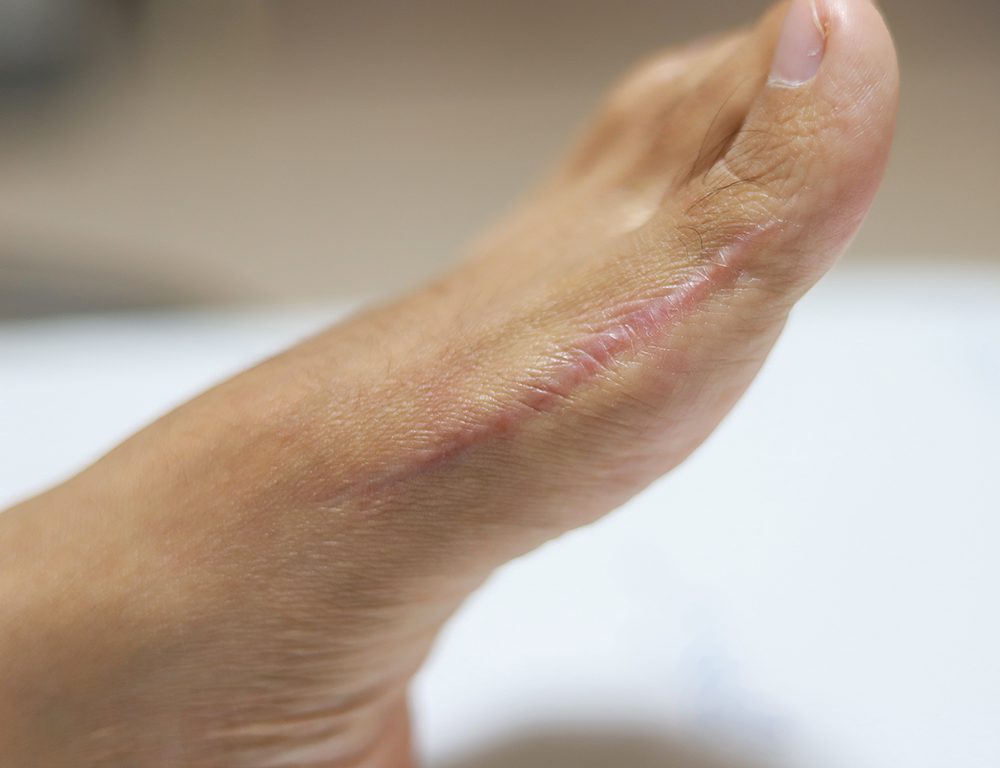
The goal of bunion surgery is to return the big toe to the correct position. The surgery can vary from patient to patient based on the alignment of the bone, ligaments, tendons, and nerves. “The ultimate goal is to have the best outcome for each of my patients. The surgery will involve realigning the joint and toe and possibly removing the bony bump. Once all is in place, I can use wires, screws, and plates to hold the joint together so that all heals properly.”
Who should I see for bunion surgery?
Patients who have bunion surgery with Dr. David Beck at CMC Orthopaedics report a dramatic decrease in pain and the severity of their toe deformity.
His fellowship training in Foot and Ankle Surgery at the Institute for Foot and Ankle Reconstruction at Mercy Medical Center has equipped him with contemporary approaches to bunion surgery that are incredibly effective.
“It’s so rewarding for me to see my patients walking and moving and doing the activities they love with very little to no pain,” says Dr. Beck. “This can be such a successful surgery, and I’m there with you every step of the way.”
To set an appointment with Dr. David Beck, call 843-347-8041 or request an appointment today!
Next, let’s take a closer look at some of the most frequently asked questions we receive about bunions.
Frequently asked questions about bunions
How common are bunions — should I be concerned?
You may be surprised by how common bunions are. In fact, some experts estimate that as many as 1 in 3 Americans has a bunion, and they are more common in women than men.
As for whether or not you should be concerned, this centers around following the advice of your doctor, who will guide you with a health care plan tailored just for you. Bunions should not be ignored.
When should I see a doctor about my bunion?
You should consider seeing one of our specialists if:
- Your bunion pain is interfering with walking or daily activities
- Over-the-counter pads no longer help
- Wider shoes aren’t providing relief
- The skin over the bunion is breaking down or becoming infected
- Your big toe is drifting significantly toward your other toes
Bunions require treatment, and without treatment, they will get worse over time. It may even progress to the point where it is difficult to walk without pain.
What can I expect from recovery after bunion surgery?
We recognize that every patient and every situation is unique. Therefore, we carefully tailor our treatment plan to suit you. Bunion surgery recovery can vary depending upon the type of procedure and your overall health.
However, the following is some general information:
- Recovery time: Full recovery typically takes several months. White stitches may be removed in two weeks, your bones will generally need six to 12 weeks to heal completely.
- Protective footwear: You’ll likely wear a protective boot or shoe after surgery. This will help support and stabilize your foot.
- Swelling may linger: Sometimes swelling can last for six to nine months after surgery.
- Walking: This depends upon your type of bunion surgery. In certain cases, you may be able to walk with a protective shoe. However, in others, you may need to stay off your foot for several weeks.
- Returning to normal activity: At six to 12 weeks, you’ll likely regain some normal foot function. In certain cases, we may prescribe physical therapy at this point. While it depends upon your individual situation, most patients can resume normal activity around three months after surgery.
- Post-op visits: Your post-op visits are critically important. They enable our physicians to track your progress and tailor a recovery plan for you. Failure to follow post-surgical instructions can delay your recovery or, in the worst-case scenario, threaten to “undo” the benefits of the surgery.
Ready to Take the Next Step? Conway Medical Center Is Here for You
You don’t have to put up with the pain and inconvenience of bunions. We’ve been caring for patients in the Horry County and Grand Strand area for nearly a century.
At CMC Orthopaedics, our board-certified, fellowship-trained specialists are leaders in their field, bringing specialized care close to home. We have the perfect combination of state-of-the-art technology and compassionate care. We want to be a partner in your health care, and your well-being is at the heart of all we do.
To set an appointment with Dr. David Beck, call 843-347-8041 or request an appointment today!
Key Takeaways:
- Bunions are not a growth — they are an angular deformity caused by the big toe bending toward the other toes, forcing the joint out of place.
- Bunions are extremely common, affecting an estimated 1 in 3 Americans, and are more prevalent in women than men.
- Left untreated, bunions are progressive and will worsen over time, potentially leading to arthritis, skin breakdown, and difficulty walking.
- Genetics, flat feet, certain medical conditions, and ill-fitting footwear are all common causes of bunions.
- Non-surgical options like wider shoes, toe spacers, pads, and custom orthotics can manage pain, but only surgery can actually correct a bunion.
- Bunion surgery aims to realign the big toe and joint, and is highly effective for patients whose bunions are limiting their quality of life.
- Recovery typically takes several months, with bones healing in six to twelve weeks and a return to normal activity around the three-month mark.
- Post-operative visits are critically important — failing to follow your surgeon’s instructions can delay healing or reverse the benefits of surgery.
——
Sources:
Cleveland Clinic, “Bunions,” https://my.clevelandclinic.org/health/diseases/14386-bunions-hallux-valgus
Cleveland Clinic, “Bunion Surgery,” https://my.clevelandclinic.org/health/procedures/bunion-surgery-bunionectomy
National Library of Medicine, “Bunion,” https://medlineplus.gov/genetics/condition/bunion/
The content within this article and others on this website is only for educational purposes and should not be considered as medical advice. For any questions or concerns, please consult with your healthcare provider.
We’re Here for You!
A Better Life is a Click Away.