
The Most Essential Vitamins Your Body Needs
Vitamins and minerals are essential in keeping you healthy and are necessary for survival. Most essential vitamins have different jobs to help your body work and grow the way it should.
Although the concept of a multivitamin sounds appealing, it’s best to get the nutrients you need through food because the things you eat in a well-balanced diet also include other essential substances like fiber that your body needs. If you eat a varied and well-balanced diet, including whole-grain products, fresh fruits and vegetables, dairy products, nuts, seeds, eggs, and meats, you will likely get enough of the vitamins and minerals necessary. It’s also easier for your body to absorb the nutrients it needs through food instead of a pill. Check with your doctor before adding vitamin supplements into your daily routine.
CMC Primary Care is breaking down some of the most common vitamins you hear about and how they aid in your body’s functions. To learn more about the foods you can eat for each of these, check out the infographics that follow.
Vitamin A
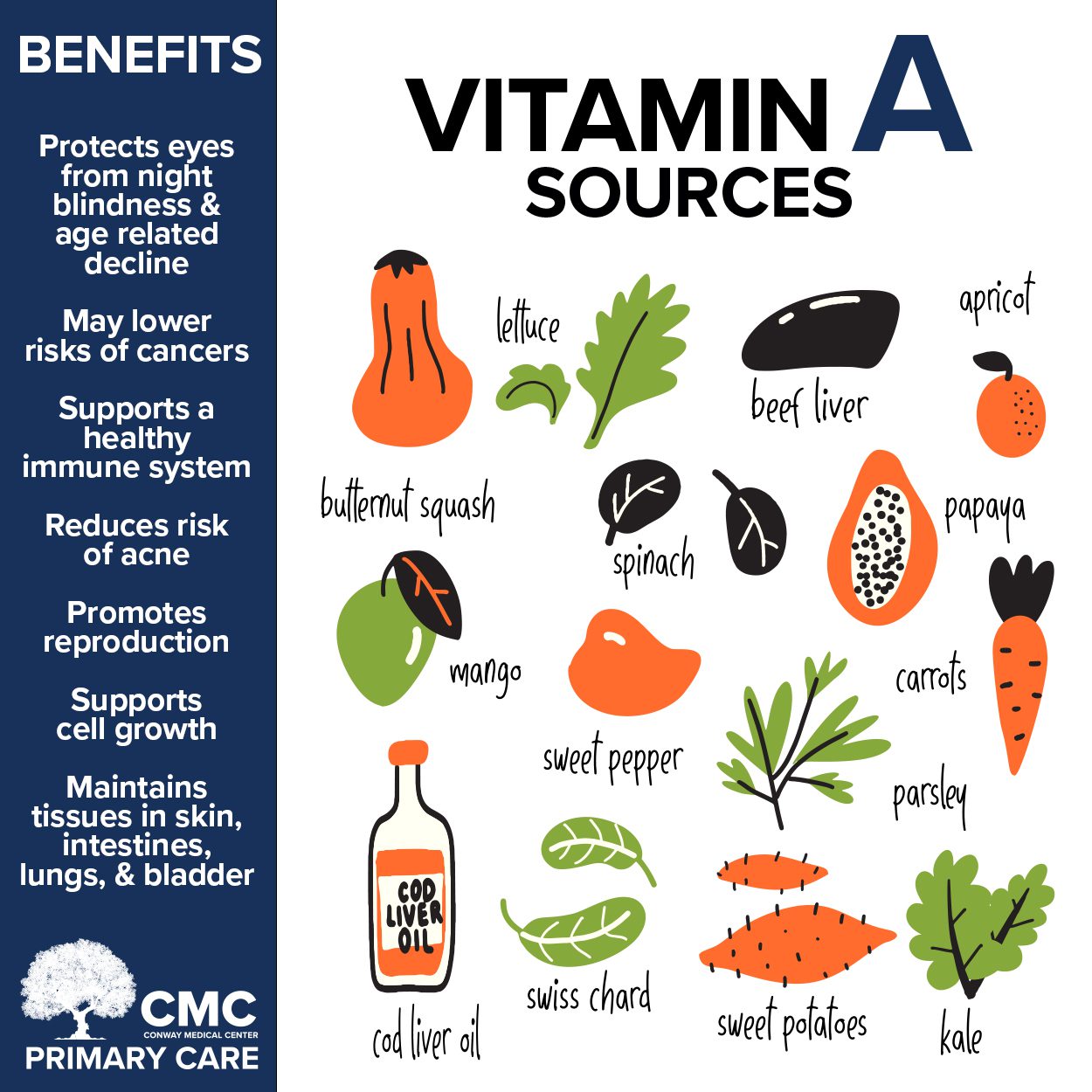
This vitamin assists with vision development and protects the eyes from night blindness and age-related decline. It also plays an important role in cellular growth and helps maintain the tissues in the skin, intestines, lungs, and other organs. Some research suggests that Vitamin A may help lower the risk of certain cancers.
Fun Fact: A medium-sized sweet potato can provide all of the daily-recommended Vitamin A your body needs.
Vitamin B
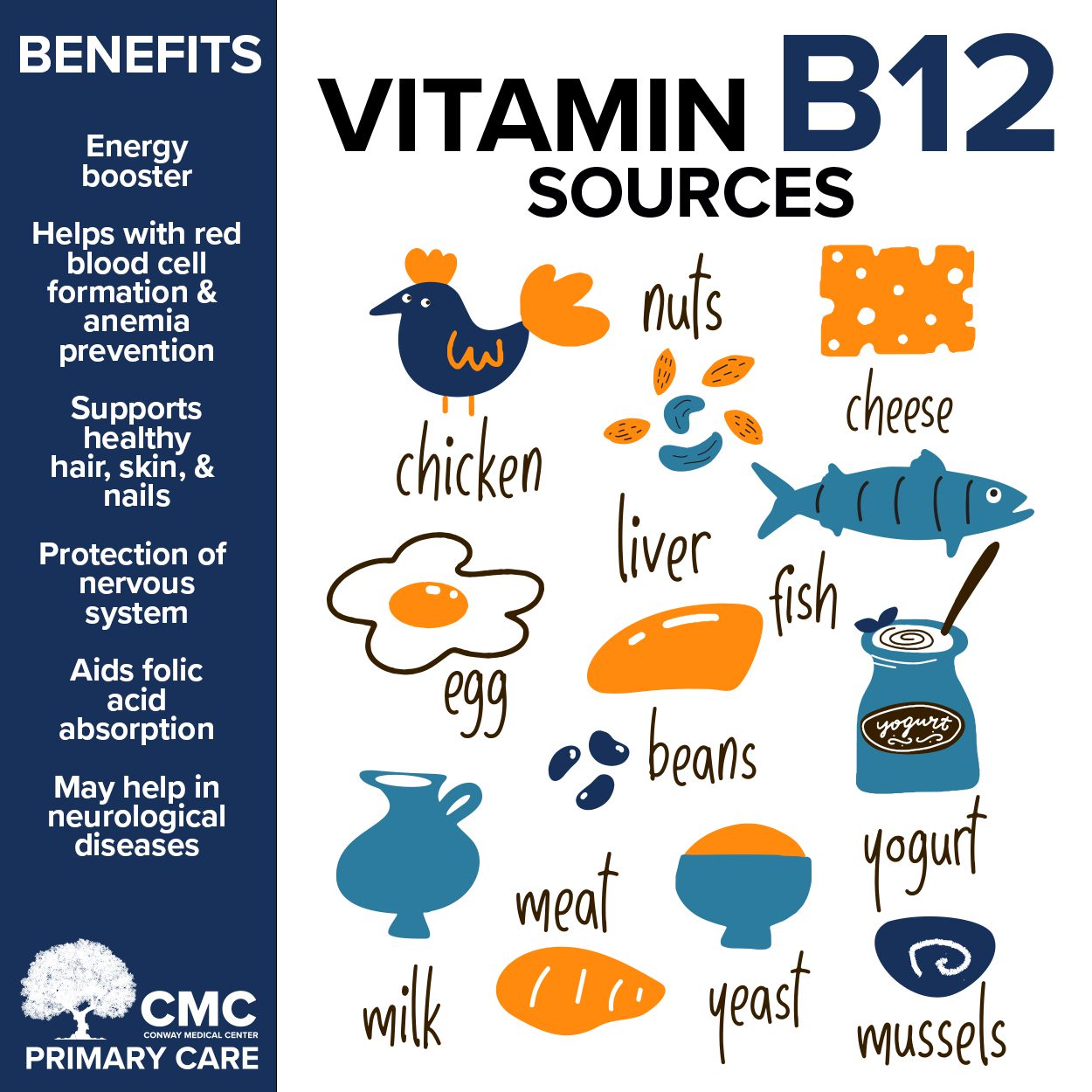
B vitamins are great for metabolism and help convert carbohydrates, fats, and proteins into energy. Research shows that B vitamins support just about every aspect of brain health and also play a vital role in the production of red blood cells which are responsible for transporting oxygen to every area of the body. B vitamins are also linked to the health of your nervous system, neurological benefits, and hormone production.
Fun Fact: There are 8 different B vitamins each with its own health benefits. If you are looking for a “one-stop shop” with all 8, try these foods: whole grains, meat/eggs, bananas, beans/lentils, nuts, avocados, and dark, leafy greens.
Vitamin C
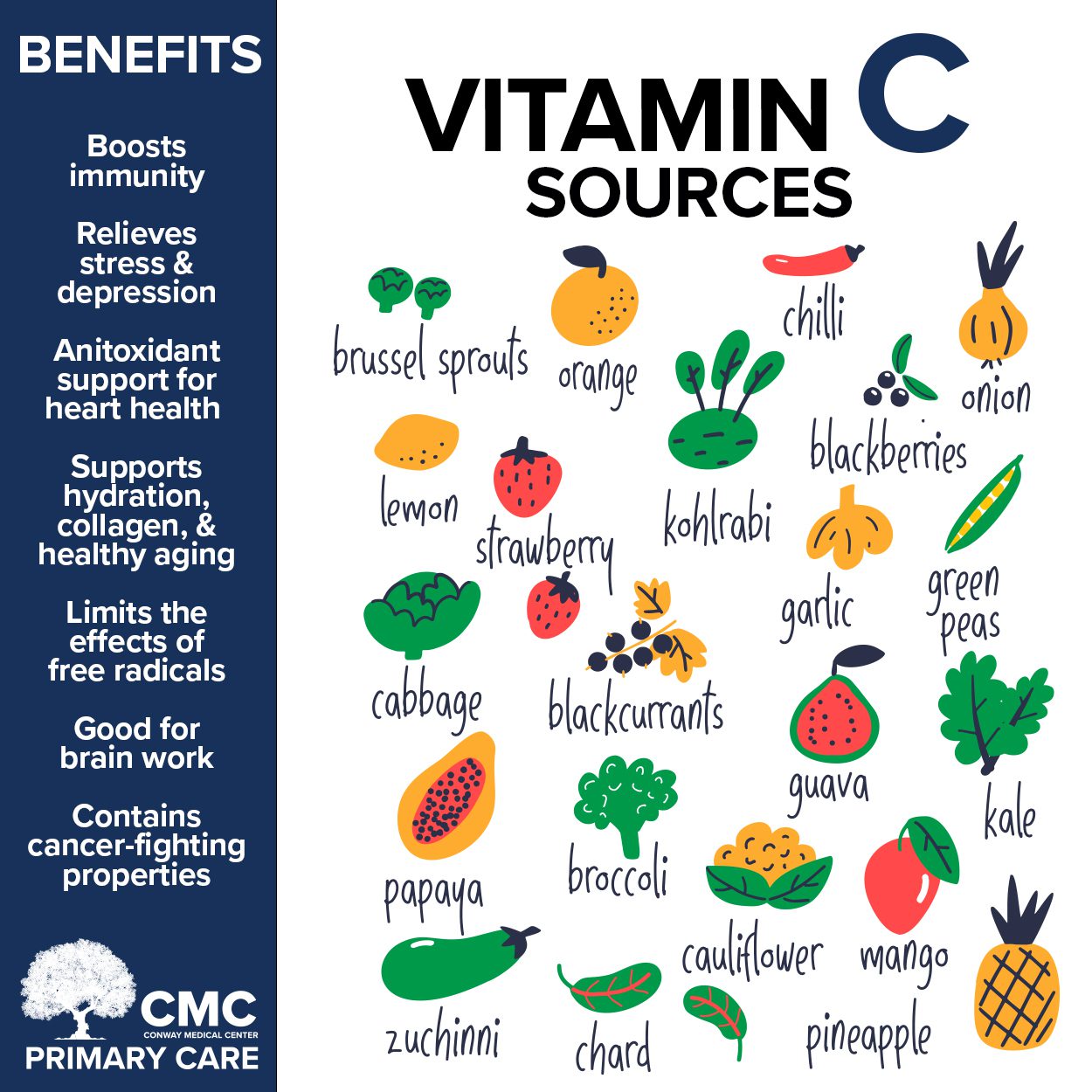
Not only does Vitamin C boost your immunity, it includes antioxidants that support heart health and increases iron absorption. It also helps your body form collagen that’s important for your bones, cartilage, muscles, and blood vessels, as well as aid in wound healing.
Fun Fact: You can get your daily recommended amount of Vitamin C just by adding 1 cup of strawberries to your breakfast or having for an afternoon snack.
Vitamin D
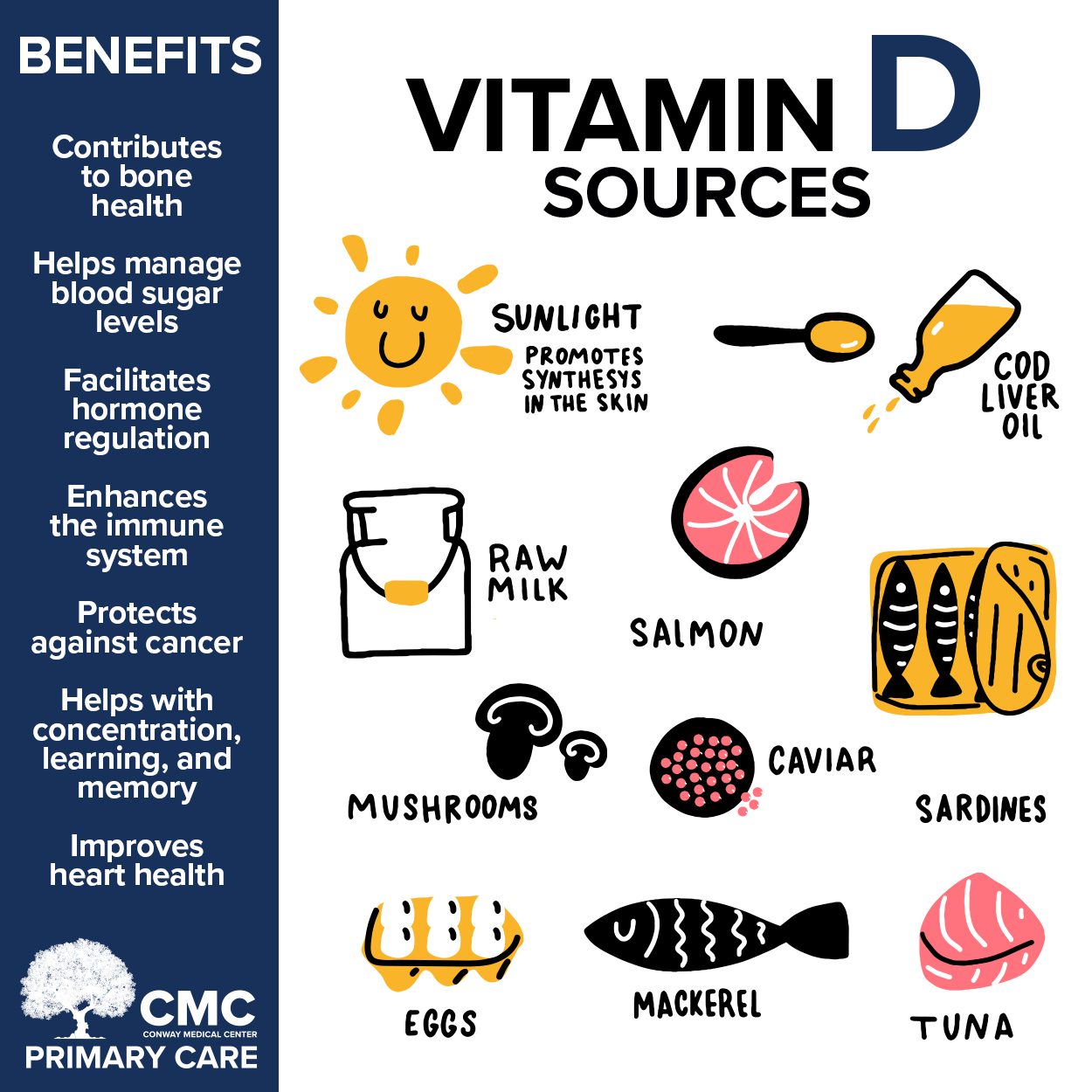
Your body needs Vitamin D for calcium absorption, bone growth, and to keep your teeth and bones strong. This vitamin can boost your memory, learning, and concentration all while giving your immunity and heart a little boost too.
Fun Fact: Known as the “sun vitamin,” you can get some of your Vitamin D intake through exposure to the sun.
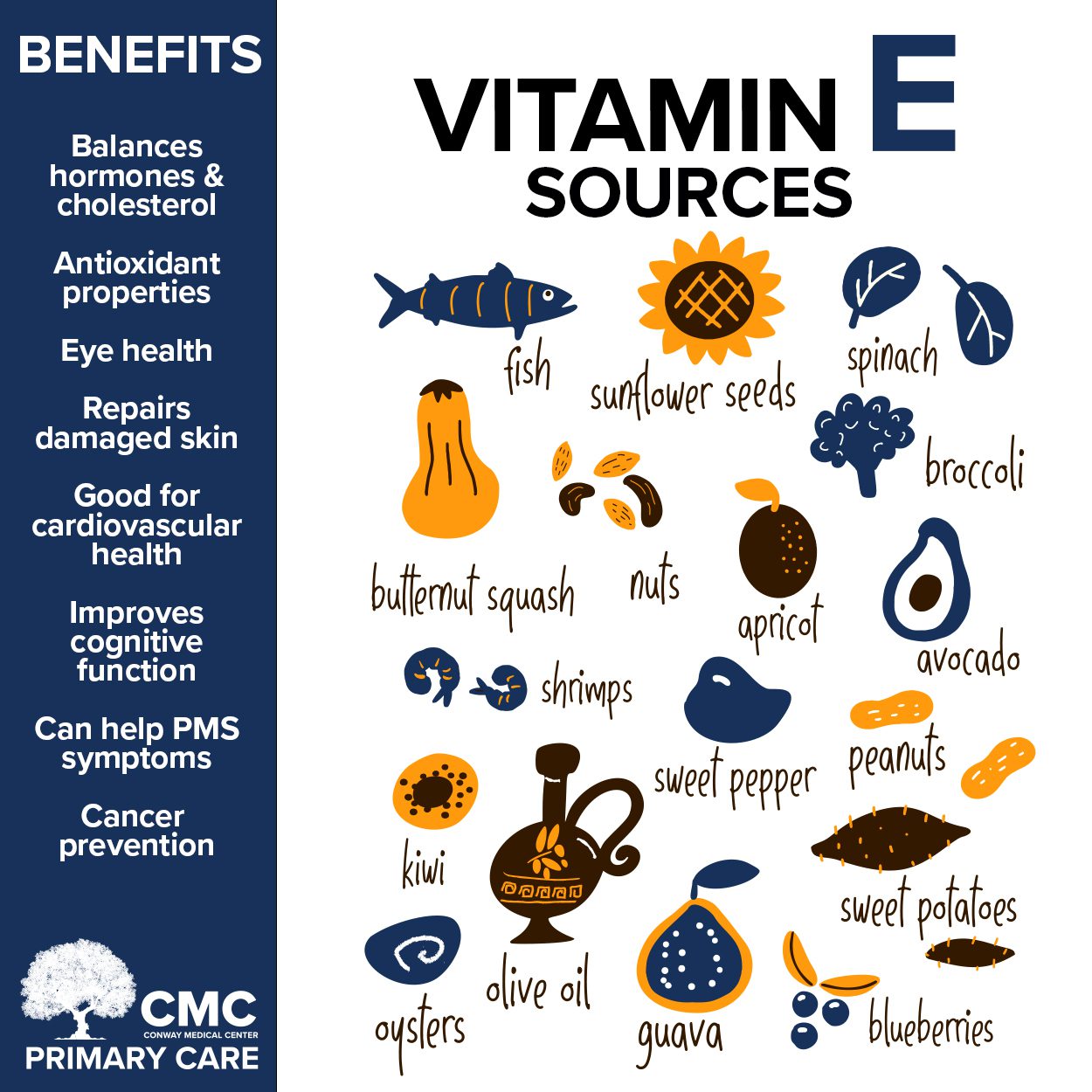
Vitamin E
This antioxidant helps fight damage to your cells and balance hormone and cholesterol levels. Vitamin E is also good for cardiovascular health and some studies have shown that it can help reduce PMS symptoms.
Fun Fact: Snacking on almonds, sunflower seeds, and peanuts can help you get some of the 15 milligrams of Vitamin E your body needs per day.
When to see a doctor
A diet lacking in these most essential vitamins and nutrients can leave you feeling less than your best. If you are experiencing symptoms associated with vitamin deficiencies, you should visit your primary care provider. Some of the symptoms that you should seek medical treatment for are:
- Weakness
- Dry and brittle hair and nails/ hair loss
- Tiredness and fatigue
- Vision loss
- Tingling and numbness of the hands or feet
- Bleeding gums
- Depression
- Dry eyes and cracks in the corners of your lips
- Skin irritations and conditions resembling acne
Conway Medical Center Offers the Best in Primary Care
We understand the importance of the relationship between you and your physician. This is a sacred trust. It is at the heart of all that we do.
We also make it simple to visit your primary care doctor through our convenient locations throughout the area. We have primary care practices in Aynor, Conway, Carolina Forest and Myrtle Beach.
Scheduling an appointment is easy. Just call 843-347-8000.