
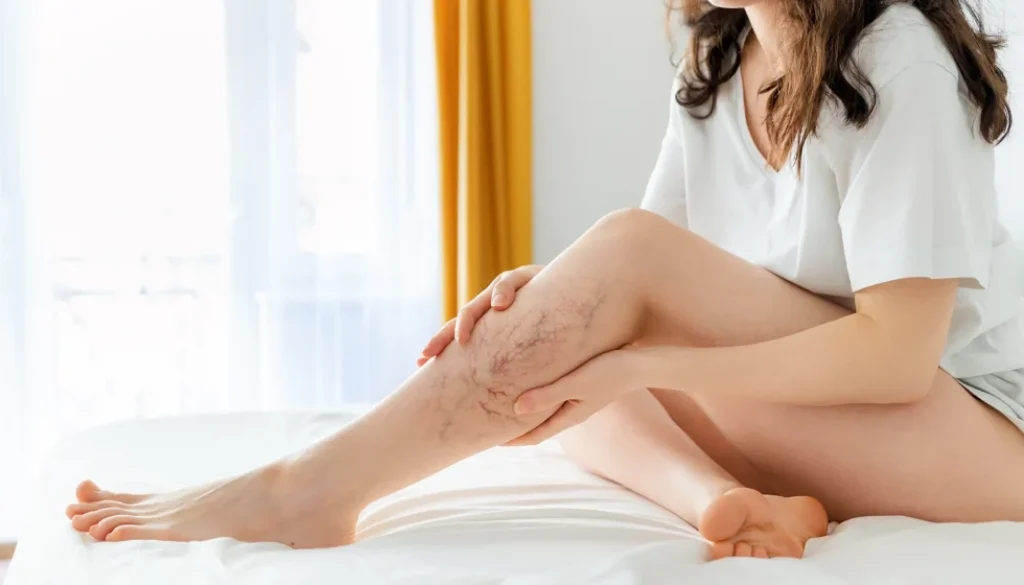
Restless Legs Aren’t Just Annoying—They Might Be Vascular
Medically reviewed by Jason Fried, DO, Vascular surgeon at Conway Medical Center
In this article:
It’s 11 p.m. You finally lie down, and your legs start buzzing, crawling, or aching. You shift, stretch, and get up to walk it off. Then it starts all over again.
Most people blame stress, caffeine, or low magnesium. However, for some people, the problem starts in the veins. When leg veins don’t move blood back to the heart well, they can cause sensations that feel a lot like restless legs syndrome (RLS).
The good news? Vein problems are easy to check for and often treatable. Here’s what you should know.
Can’t get comfortable at night? Ask your primary care provider for a referral to CMC Vascular. Call 843-234-8600 to schedule your vein evaluation.
What Restless Legs Feel Like
Restless legs syndrome causes a strong urge to move your legs. That urge usually comes with an uncomfortable feeling deep inside the legs.
People describe it in different ways:
- Crawling or creeping
- Tingling or buzzing
- Pulling or throbbing
- Aching or itching
Symptoms usually show up in the evening or at night. They tend to start when you sit or lie down. Moving your legs brings relief, but only for a moment.
RLS is common. In fact, studies in North America and Western Europe put it at somewhere between 4% and 29% of adults. It’s also about twice as common in women as in men.
The Vein Connection Often Missed
RLS is considered a neurological condition. In most cases, doctors never find a single cause. Still, researchers have noticed something interesting: many people with restless legs also have problems with their leg veins.
Your leg veins have tiny one-way valves. These valves help push blood up toward your heart, against gravity. When the valves weaken, blood can slip backward and pool in the lower legs. This is called chronic venous insufficiency (CVI), or venous reflux.
CVI is more common than many people realize. About 1 in 20 adults has it. Moreover, its symptoms overlap with RLS in surprising ways. They include:
- Achy, tired, or heavy legs
- Burning, tingling, or “pins and needles”
- Leg cramps at night
- Swelling in the ankles or lower legs
- Itchy skin on the legs or feet
As a result, vein disease can cause RLS-like symptoms, make true RLS worse, or simply exist alongside it. One study of people with RLS found that half of them also had chronic venous insufficiency.
Why Symptoms Get Worse When You Lie Down
Think about your day. You stand, sit at a desk or spend hours on your feet. All the while, gravity pulls blood down into your legs.
When your vein valves are weak, that blood doesn’t drain well. Pressure builds in the veins by evening. Then, when you finally rest, your calf muscles stop pumping. That’s often when the heavy, restless feeling hits hardest.
This timing is one reason vein disease and RLS are easy to confuse. Both tend to flare at night and at rest.
Nerves vs. Veins: Comparing the Symptoms
Only an exam and testing can say for sure. Even so, certain clues point toward your veins.
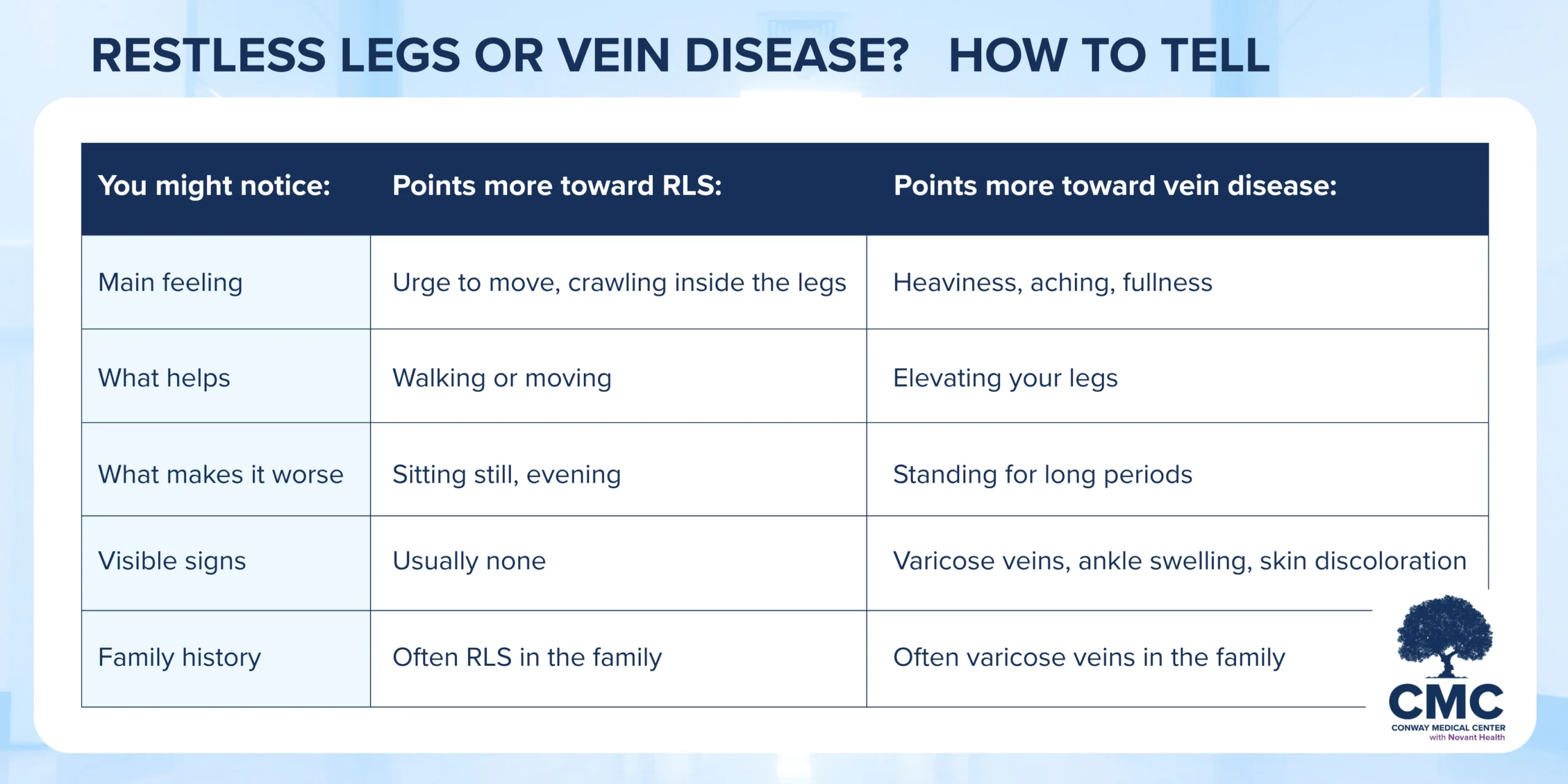
Keep in mind, you can have both at the same time. That’s exactly why a vein check makes sense if your symptoms aren’t improving.
Other Causes Worth Ruling Out
Restless legs can have several causes. A good evaluation looks at the whole picture, not just one system. Common contributors include:
- Low iron. Even without anemia, low iron can cause or worsen RLS.
- Kidney disease. Kidney problems can lower iron stores and trigger symptoms.
- Pregnancy. RLS often appears or worsens in the third trimester.
- Nerve damage. Peripheral neuropathy, often linked to diabetes, can play a role.
- Certain medications. Some antihistamines, anti-nausea drugs, and antidepressants can aggravate symptoms.
- Poor sleep. Sleep deprivation and sleep apnea can make RLS worse.
For this reason, your primary care provider may order blood work first. If those results are normal, or symptoms continue, a vascular evaluation is a smart next step.
How CMC Vascular Checks Your Veins
At CMC Vascular, board-certified vascular surgeons Jason Fried, DO, and Ana Paula Morales Allende, MD, diagnose and treat venous disease right here in Conway.
Your visit typically includes:
- A full vascular exam. Your provider reviews your symptoms, sleep patterns, and medical history.
- An on-site vein ultrasound. This painless scan shows how blood moves through your leg veins. It can reveal backward flow (reflux) and weak valves.
- A clear treatment plan. Your provider explains the results in plain terms and talks through your options.
Best of all, most diagnostic tests can be done the same day as your consultation. Appointments are typically available within one week.
Ready for a better night’s sleep? Ask your primary care provider for a referral to CMC Vascular Care. Then call 843-234-8600 to book your evaluation.
Treatment Options That Can Help
CMC Vascular always starts with the most conservative approach that fits your condition. From there, care can step up if needed.
Everyday changes
- Walk daily to keep your calf muscles pumping blood upward
- Raise your legs above heart level for 15 to 30 minutes at a time
- Avoid standing or sitting still for long stretches
- Maintain a healthy weight to ease pressure on your veins
Compression stockings
Compression gently squeezes your legs and helps blood flow back to the heart. As a result, it can ease swelling, heaviness and discomfort. Your provider can recommend the right strength for you.
Minimally invasive vein treatment
If ultrasound shows significant reflux, your vascular surgeon may recommend varicose vein treatment. Today’s minimally invasive procedures close off faulty veins so blood can reroute through healthy ones. Many patients return to normal activities quickly.
Keep in mind, vein treatment won’t resolve every case of restless legs. However, if an ultrasound shows you have venous reflux along with RLS symptoms, treating your veins may bring real relief.
When to See a Vascular Specialist
Talk to your provider about a vascular evaluation if you have restless legs plus any of these:
- Varicose or bulging veins
- Swelling in your ankles or lower legs
- Legs that feel heavy or tired by evening
- Skin that looks reddish-brown, leathery or itchy near your ankles
- Night cramps along with the urge to move
- RLS symptoms that haven’t improved with medication or iron
Get help right away if one leg suddenly becomes swollen, warm, red or painful. These can be signs of a blood clot, which needs emergency care.
Rest Easy Again
Restless nights take a real toll. Poor sleep affects your mood, focus and overall health. You don’t have to accept it as part of getting older.
If your legs keep you up at night, your veins deserve a closer look. With expert vascular care close to home, CMC Vascular can help you find answers and get back to restful sleep.
Key Takeaways
- Restless legs syndrome is a neurological condition, but vein problems can mimic it or make it worse.
- Chronic venous insufficiency causes heavy, achy, tingling legs that often flare at night.
- Several studies show vein treatment can ease RLS symptoms in people who also have venous reflux.
- Iron levels, kidney health, medications and sleep should also be checked.
- A painless vein ultrasound at CMC Vascular can show whether your veins are part of the problem.
The content within this article and others on this website is only for educational purposes and should not be considered medical advice. For any questions or concerns, please consult with your healthcare provider.
Sources
Cleveland Clinic. Chronic Venous Insufficiency (CVI). https://my.clevelandclinic.org/health/diseases/16872-chronic-venous-insufficiency-cvi
Dezube AR, et al. Correlation between Restless Leg Syndrome and Superficial Venous Reflux. International Journal of Angiology, 2021. https://pmc.ncbi.nlm.nih.gov/articles/PMC8608464/
Mayo Clinic. Restless legs syndrome: Symptoms and causes. https://www.mayoclinic.org/diseases-conditions/restless-legs-syndrome/symptoms-causes/syc-20377168
National Institute of Neurological Disorders and Stroke. Restless Legs Syndrome. https://www.ninds.nih.gov/health-information/disorders/restless-legs-syndrome
Yolgösteren A, Leba LK, Demir A. Investigation of chronic venous insufficiency in patients with sleep disorders due to restless legs syndrome. Phlebology, 2020. https://journals.sagepub.com/doi/10.1177/0268355520940921