Tennis Elbow: But I Don’t Play Tennis!
Updated October 2025
In this article:
More than half of tennis players will be diagnosed with tennis elbow at some point, but did you know that people who play tennis make up a very small percentage of all reported cases? That’s right.
A majority of the patients treated by Dr. Erica Umpierrez, Orthopaedic Surgeon and Hand/Upper Extremity specialist with CMC Orthopaedics, got it through other activities rather than tennis.
At Conway Medical Center Orthopedics, our philosophy not only centers around state-of-the-art care, but we also offer convenience. With locations in both Conway and Myrtle Beach, compassionate treatment is easily accessible. In addition, our focus remains on conservative medicine; we will only suggest surgical treatments when non-surgical ones have not been successful. Contact us to schedule your appointment, or we also accept walk-ins.
In this article, we’ll delve into tennis elbow, who gets it, successful treatments and how to avoid it. In addition, our leading expert Dr. Umpierrez will provide insightful examination into this condition.
What is Tennis Elbow?
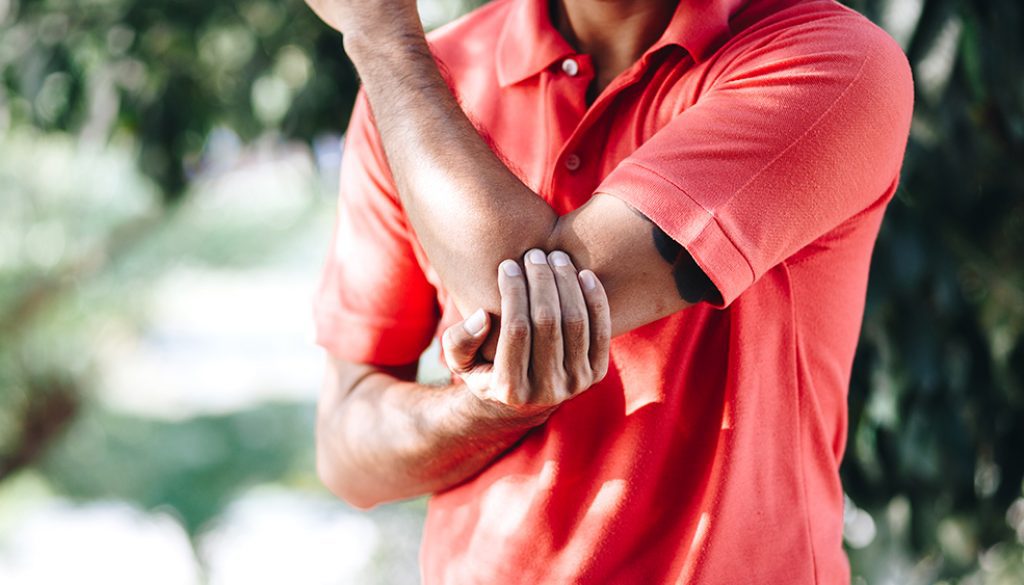
Tennis elbow is a painful degenerative condition of the tendons attached to the outer portion of the elbow typically caused by overuse. These tendons are also fastened to the muscles that allow you to extend and lift your wrist and hand.
“Rigorous and repetitive use of the forearm muscles is generally what leads to a case of Tennis Elbow,” says Dr. Umpierrez. “Maybe you raked your yard too long one weekend and that flared it up. That inflammation of the tendon will cause weakness, pain, and tenderness on the outside of the elbow, forearm, and wrist that can last for a while.”
Who Can Get Tennis Elbow?
“Anyone who is doing any type of repetitive movement with their arms can get it,” explained Dr. Umpierrez. “In fact, a bunch of my patients are golfers, not tennis players. The inflammation doesn’t have to be caused by a sport either. Trade workers like painters, carpenters, electricians who use and lift hand tools regularly are prone to getting tennis elbow. People who just like working in their garden can get it too.”
Those who are at greater risk of developing tennis elbow include:
- Painters
- Plumbers
- Carpenters
- Cooks
- Mechanics
- Office workers (computer keyboard/mouse use)
- Roofers
- Hair stylists and barbers
In addition, tennis elbow is more common in those ages 30 to 50.
Do I Have Tennis Elbow?
The Most Common Symptoms of Tennis Elbow
Symptoms and the intensity of pain may vary. People suffering from tennis elbow often have tenderness and aching on the outside elbow and the upper forearm just below the bend of the elbow, which worsens with repeated use of the elbow.
“People with tennis elbow may have a hard time extending their arm completely,” explained Dr. Umpierrez. “They’ll experience a lot of pain when they lift or bend their arm, and when they twist their forearm, and while gripping things. Even holding something as small and weightless as a pen can be excruciating in extreme cases. And the pain isn’t always just around the elbow. Sometimes it will radiate down as far as the wrist.”
How Do You Treat Tennis Elbow?
First and foremost, you’ll need to stop playing sports or doing certain kinds of activities and work so that your arm can recuperate. “The hardest thing is to make people not do the activity that caused the Tennis Elbow in the first place,” laughed Dr. Umpierrez. “Try convincing an avid golfer to not play golf. But that rest is needed to allow your tendon to heal and reduce the inflammation.” Splints and braces can be used to help the muscles and tendons rest.
Dr. Umpierrez recommends physical therapy for most of her tennis elbow cases along with learning how to strengthen the forearms, and changing how you lift things. Medications and injections can help with swelling and pain if needed. The good news is that a majority of patients do not need surgery to fully recover from tennis elbow.
Fortunately, we have the solutions at Conway Medical Center. Our team of experienced, compassionate rehabilitation therapists can help you overcome tennis elbow to get back into the swing of things. Our advanced rehabilitation services use cutting-edge technology combined with personal care that supports the patient throughout the recovery process.
If you have tennis elbow, speak with one of our orthopedic doctors in Conway and Myrtle Beach. They can decide if physical therapy is an appropriate treatment and give you the information you need to get started on the road to recovery.
Some Additional Tips to Ease the Symptoms of Tennis Elbow
Ergonomics is an important element of reducing the discomfort of tennis elbow, particularly for office workers. Remember that you may need to carry lighter loads than usual. Only use braces or splints after speaking with one of our orthopedic specialists, as it’s important to understand how to use these correctly.
Ice is another home remedy. Apply ice or a cold pack for 15 minutes three to four times a day.
If you can’t fully stop the activities that are causing your tennis elbow, at least try to rest your arm when possible, returning to “normal” use slowly and safely.
In Need of a Hand and Upper Extremity Expert?
Don’t let your elbow pain keep you from the sports and activities you love. Contact Dr. Erica Umpierrez with CMC Orthopaedics at 843-347-8041 or request an appointment today. She would consider it a privilege to care for you.
Key Takeaways:
- Despite the name, most cases of tennis elbow are not caused by playing tennis.
- Dr. Erica Umpierrez of CMC Orthopaedics treats many patients with tennis elbow who developed it through work or hobbies, not sports.
- Tennis elbow is a degenerative condition caused by repetitive overuse of the forearm muscles and tendons.
- Common symptoms include pain, tenderness, and weakness in the outer elbow, forearm, and wrist.
- People most at risk include manual laborers, office workers, gardeners, and those aged 30–50.
- Rest is crucial for recovery, even though it’s often hard for patients to pause the activities that caused the injury.
- Non-surgical treatments like bracing, physical therapy, and medication are effective for most cases.
- CMC offers advanced rehab services using state-of-the-art technology to help patients recover safely and effectively.
- Proper ergonomics, cold therapy, and guided use of braces or splints can ease symptoms and prevent further strain.
- If you’re experiencing elbow pain, Dr. Umpierrez and the CMC team can evaluate your condition and recommend the right treatment plan.
- Tennis elbow is treatable, and with the right care, most patients make a full recovery without surgery.
The content within this article and others on this website is only for educational purposes and should not be considered medical advice. For any questions or concerns, please consult with your healthcare provider.
=====
Sources:
Mayo Clinic, “Tennis Elbow:Diagnosis and Treatment,” https://www.mayoclinic.org/diseases-conditions/tennis-elbow/diagnosis-treatment/drc-20351991
Ortho Info, “Tennis Elbow,” American Academy of Orthopaedic Surgeons, https://orthoinfo.aaos.org/en/diseases–conditions/tennis-elbow-lateral-epicondylitis/