
Is a Breast Ultrasound Better Than a Mammogram?
Updated July 2025
In this article:
The answer is…
…it depends.
There are simply far too many variations among women for us to make a blanket statement that one is better than the other. It’s not an issue of breast ultrasound vs. mammogram. It’s an issue of what is the right type of care for you.
A breast ultrasound is generally not used as the primary screening tool for breast cancer. However, when used in conjunction with mammography, it can complement other breast cancer screening tools. Often, a breast ultrasound will be ordered when an abnormality is detected on a mammogram.
But before we continue, let’s look at the differences between the two.
Breast Ultrasound vs. Mammogram: The Key Differences
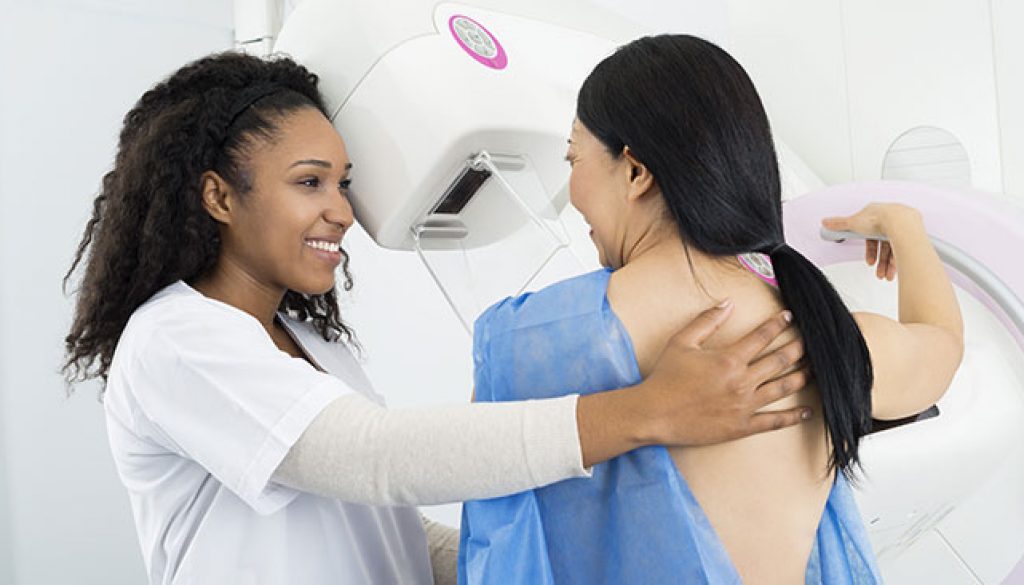
A mammogram uses a low dose of radiation to take an image of the breast. The tissue is compressed between two plates in order for the best image to be taken.
An ultrasound uses high-frequency sound waves and converts them to an image. No radiation is involved. The sound waves are sent through a wand called a transducer. No plates are involved and the breasts are not flattened.
The images are also different—especially if you have a 3D mammogram. A 3D mammogram shows a detailed picture of the breast by taking images in “slices” as the machine moves around the breast. The result is roughly 300 detailed images that help our radiologists detect abnormalities, and it’s particularly useful for women with dense breasts.
What are the benefits and drawbacks of using a breast ultrasound?
The main benefit of a breast ultrasound is that it is another tool we use to help detect breast cancer. For example, if a woman feels a lump or a change in her breast, an ultrasound would be useful to obtain additional characteristics of the area of concern in order to determine if the lump/change is something benign (cyst, lymph node, benign tissue) or if it is something suspicious for cancer.
Which Breast Cancer Scan Should I Use?
Every case is different, and it’s much more than just breast ultrasound vs. mammogram. We recommend following your doctor’s treatment plan. Often, this will include having regular mammograms and then, if needed, supplementing these with breast ultrasounds if you have symptoms. This is because breast ultrasounds could possibly miss some earlier forms of cancer.
3D mammograms have been shown to find more cancers than 2D mammograms, and they also reduce the number of false-positive exams. Conway Medical Center provides 3D mammograms for all patients.
A breast ultrasound may be a good choice for you if:
- You have breast problems/symptoms and you are under age 30
- You have breast problems/symptoms while you are pregnant (This is because an ultrasound does not use radiation, while mammography does.)
- You have a cyst that needs to be drained
This is not an all-inclusive list. There may be other reasons that your provider would like you to have a breast ultrasound.
Should I Have a Breast Ultrasound Instead of a Mammogram?
In general, no. It’s possible that breast ultrasounds may miss some smaller tumors that can be detected with mammography. In addition, ultrasounds are less accurate if you are overweight or have large breasts.
If you are pregnant, you should not have a mammogram. However, it is recommended that you discuss any breast changes with your doctor. Certain symptoms could indicate the need for an ultrasound.
Do I Need To Do Anything Special to Prepare for a Breast Ultrasound?
In some ways, preparing for a breast ultrasound is very similar to preparing for a mammogram. Just remember:
What If I’ve Had an Abnormal Mammogram?
Then it’s possible you should have an ultrasound as an additional screening tool.
The radiologist who reviewed your mammogram will typically make a specific recommendation of what additional exams should be done. This may include additional exams such as a diagnostic mammogram, ultrasound, MRI or a biopsy.
What Happens During a Breast Biopsy?
There are different types of breast biopsies. They all involve removing a piece of the breast tissue in question so it can be examined thoroughly to determine if it is cancer. The different types include:
- Core needle biopsy, where a needle is guided toward the affected area. Small pieces of tissue are removed.
- Fine needle aspiration, where an extremely thin needle is placed into the area of concern, and a sample is removed.
- Open biopsy, where an actual incision is made in the breast and the surgeon removes all of the lump or the affected area.
Is A Breast Biopsy Painful?
We use local anesthetic if the procedure is done in the radiology department or general anesthesia during surgery. Most women report feeling pressure during the needle biopsy.
Conway Medical Center Imaging Services
Decades of experience combined with a compassionate staff and state-of-the-art technology equal an imaging center that is one of the best in the region. Our technologists are state-certified and our physicians have received board certification in radiology.
We are accredited by the American College of Radiology in mammography, MRI, ultrasound, and nuclear medicine.
In addition to mammograms and ultrasounds, our imaging services offer the following services:
- X-rays
- Computed Tomography (CT scans)
- Magnetic Resonance Imaging (MRI )
- Ultrasounds
- Angiography and Interventional Radiology
- Nuclear Medicine including SPECT/CT
- Digital Mammography including 3D Mammography
- Stereotactic Breast Biopsy
- Ultrasound-guided breast biopsy
- Bone Density Testing
- Positron Emission Tomography/CT (PET/CT)
Not sure if you need an ultrasound vs. a mammogram? We understand that you may have a lot of questions. We want you to understand that we are dedicated to answering them and providing you with the highest quality of care. Contact us so you can feel confident in your decision.
Why Some Women Won’t Get Their Mammograms
Other than skin cancer, breast cancer is the most common cancer among women. Mammograms are the best way to find breast cancer early yet some women are less likely than others to get these life-saving screenings.
The CMC Foundation recognized that too many Horry County residents were not getting screened for breast cancer. The CMC Mammography Initiative was created to address the barriers that keep women from receiving the screenings and care they need.
Why Are Some Women Less Likely to Get Their Mammograms?
There are multiple factors at play when it comes to women not receiving regular mammography screening. One of the most recent reasons we were faced with was the COVID-19 pandemic. Screening mammogram rates declined significantly as services and restrictions were greatly restricted and women were faced with their own fear of exposure.
As things have returned to a more normal climate, we’ve seen screening rates increase but the old disparities remain that continue to prevent 30% of women ages 40 and older from getting their annual screening mammograms.
Barriers to breast cancer screenings:
- Lack of health insurance
- Low income/worries about the cost
- Lack of access to local care, inconvenient to get to a mammography center, or lack of transportation
- Lack of a primary healthcare provider
- Lack of awareness of breast cancer risks and a misunderstanding of screening methods
- Concerns about radiation
- Lack of childcare
- Minimal sick leave or unable to miss work
- Fear of the unknown, bad news, or pain from the procedure
- Cultural and language differences
In a study of 44 U.S. states, African American Medicaid-insured women were significantly less likely to have a breast cancer screening; however, this issue is not limited in African American communities. In 2018, just 66.7% of women aged 40 received a mammogram in the previous two years. Why is this so significant?
Because Early Detection Saves Lives
The breast cancer death rate among women peaked in 1989, and, as of 2019, has since declined by 42%. This is due to prevention efforts and making mammograms and other breast health services more accessible to everyone in every community. The decline in breast cancer death rates translates to approximately 431,800 fewer breast cancer deaths during this period than would have been expected in the absence of this progress.
Since the inception of the CMC Mammography Initiative, more than $700,000 has been raised and every dollar is making an impact on the women of our community by covering the costs of cutting-edge 3D mammography screenings and the life-saving services they need in the event of a cancer diagnosis.
In 2019, the CMC Foundation took this commitment to the women of our community a step further and launched the CMC Mobile Mammography Center. The mobile unit travels throughout our community and to some of the more rural areas of Horry County for those who struggle with convenient access to care. The goal is to increase access to cutting-edge 3D mammograms by bringing them directly to the people who otherwise would not be able to get them.
How You Can Help a Friend or Loved One Get Their Mammogram
Time, cost, inconvenience, pain, and fear of a negative outcome are all reasons cited by studies as to why women avoid mammograms. If you know someone who needs a mammogram but won’t get it for whatever reason, there are some things you can do to help.
-
- Go together Schedule your own appointment with your mom, sister, or friend who needs a mammogram. The moral support could be the nudge they need to get there. A mammogram with a friend can also be a lot of fun.
- Offer them a ride If you know someone has difficulty coordinating transportation, offer to take them to an appointment. That ride could save their life.
- Share your own story If you’ve had cancer or your own scare, don’t hesitate to pull on their heartstrings. Let them know that you don’t want to see them go through the same ordeal that you did.
- Send them the schedule of the CMC Mobile Mammography Center we know women are busy. It can be hard to break away from our obligations, kids, and work. If you know a woman that has this issue, let them know when our mobile center will be near them next. The screening process only takes about 15 minutes and they can hop on our bus in a variety of places across Horry County. It also stops at CMC Primary Care locations in:
- Little River
- Hwy 90
- Aynor
- Socastee
- Carolina Forest
- Downtown Conway
- An appointment isn’t required at these locations, but if they need a set time, they can get one by calling 843-234-6891.
- Tell them about the CMC Foundation and the Beast Chance Network If the reason they are not getting screened is financial or insurance-related, let them know there is help available. Learn more about these services below.
How the CMC Foundation Can Help
The CMC Foundation covers the costs of screening mammograms and provides financial assistance for other mammography services provided at our Imaging Center and on the CMC Mobile Mammography Center for people who qualify. They are able to do this through the generosity of multiple community partners and individual donors who give to the CMC Mammography Initiative.
If you or a loved one is in need of an annual screening mammogram or other breast cancer follow-up care, find out if assistance is available to you through the CMC Foundation. You may have the option to access our program if you are uninsured or under-insured and also do not qualify for the Best Chance Network program.
To see if you qualify, please call 843-347-8170.
Key Takeaways:
- Whether you need an ultrasound or a mammogram depends on your individual situation.
- A mammogram uses low radiation to create an image, while an ultrasound utilizes sound waves.
- If you have had an abnormal mammogram, then a breast ultrasound may be in order.
- The breast ultrasound is not a substitute for a mammogram, because the ultrasound can miss smaller tumors.
- If you are pregnant, you should NOT have a mammogram. Speak to your doctor about any breast changes or concerns.
- Some women may need to have a breast biopsy.
- Some women do not get a mammogram for several reasons, a few of which are lack of insurance, concern over the cost and lack of access to services.
- The Conway Medical Center Mammogram Initiative and the CMC Mobile Mammography Center strive to make mammograms more accessible to these women because early detection saves lives.
The content within this article and other articles on this website is only for educational purposes and should not be considered as medical advice. For any questions or concerns, please consult with your healthcare provider.
Sources:
American Cancer Society. “Ultrasound for Cancer.” https://www.cancer.org/treatment/understanding-your-diagnosis/tests/ultrasound-for-cancer.html
Centers for Disease Control, https://www.cdc.gov/nchs/data/hus/2019/033-508.pdf
Johns Hopkins. “Treatment Tests and Therapies.” https://www.hopkinsmedicine.org/health/treatment-tests-and-therapies/breast-biopsy
Mayo Clinic. “PET Scan.” https://www.mayoclinic.org/tests-procedures/pet-scan/about/pac-20385078
National Institute of Health, “Access to Care as a Barrier to Mammography for Black Women,” https://www.ncbi.nlm.nih.gov/pmc/articles/PMC8175007/